Exploring passes that span global themes—from classroom directions to travel-inspired identifiers—helps educators and travelers stay organized. This article spotlights five top picks that embody the idea of an “around the world pass,” whether for school hallways, library rooms, or voyage-ready adventures. Each entry includes a quick overview and practical details to help you choose the right fit for your needs.
| Product | Brand | Type |
|---|---|---|
| Around the World in 80 Days (1956) | — | Film/Book Tie-In |
| 8 Pcs Outer Space Magnetic Hall Pass | — | Hall Pass Set |
| Around The World In 80 Days | — | Book |
| The Kearsarge Pass Map | Tom Harrison | Map |
| Around the World in 180 Days Teacher’s Guide | Sherrie Payne | Educational Guide |
Around the World in 80 Days (1956) – Classic Adventure Tie-In

The 1956 classic “Around the World in 80 Days” connects readers to a timeless adventure tale. While primarily known as a cinema classic, this listing captures the cultural footprint of the journey, offering a gateway for educators and fans to explore global travel narratives. The work’s enduring appeal lies in its cross-cultural exploration and narrative momentum, making it a relevant reference point for discussions about world travel in classrooms or library settings. Use this as a literary anchor for lessons on pacing, geography, and historical context.
8 Pcs Outer Space Magnetic Hall Passes
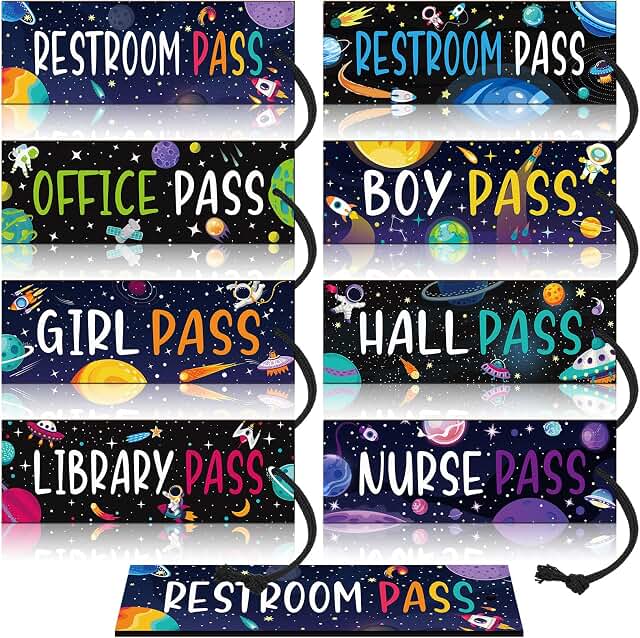
These magnetic hall passes come as a cohesive set designed for classrooms and busy halls. The eight-piece assortment includes distinct designs for different roles—hall pass, student passes for girls and boys, nurse, library, office, and restroom passes. At approximately 6.7 by 2.4 inches (17 by 6 cm) and 3 mm thick, they strike a balance between visibility and compactness. Crafted from EVA, paper, and magnetic materials with a protective film, the passes are durable, color-fast, and easy to sanitize, reducing wear during daily use.
Around The World In 80 Days

This listing presents another edition or related format of the well-known travel narrative. It serves as a supplementary reference for readers and educators exploring literary voyages that traverse continents and cultures. The material can support cross-curricular activities such as geography mapping, historical context discussions, and comparative literature studies, enabling students to engage with global themes in an accessible format. Consider pairing with maps or travel journals to enrich classroom activities.
The Kearsarge Pass Map

The Kearsarge Pass Map provides a detailed topographic resource for hikers, students, and travelers studying mountaineering routes in the Sierra Nevada. Authored and illustrated by Tom Harrison, the map offers practical route information, elevation contours, and terrain features that support field-based learning and outdoor instruction. This map can be a valuable reference in geography or outdoor education lessons, enabling hands-on explorations of landscape, navigation, and planning for excursions.
Around the World in 180 Days Teacher’s Guide

The Around the World in 180 Days Teacher’s Guide offers educational support for extended geography and world-culture units. Authored by Sherrie Payne, this guide aims to structure instruction, activities, and assessments around global travel themes. Teachers can leverage its framework to design multi-week projects, integrate cross-curricular tasks, and facilitate collaborative learning experiences that explore world regions, cultures, and historical contexts. The guide serves as a practical planning resource for educators pursuing immersive world-travel curricula.
Buying Guide
Key considerations when selecting around-the-world passes and related educational or travel-themed resources include suitability for the setting, durability, and ease of use. For classroom environments, prioritize passes with clear labeling, bright colors, and sturdy construction to withstand daily handling. Magnetic passes offer convenience for quick attachment and removal, though ensuring compatibility with existing classroom magnet boards is wise. For younger students, choose designs that balance engagement with legibility, making identification simple during transitions.
Content relevance is another important factor. Materials tied to well-known travel narratives can support geography and literacy objectives, while maps and guides provide tangible navigation and planning exercises. When pairing books or guides with activities, consider alignment with your curriculum standards and learning goals, such as map reading, cultural awareness, or historical context analysis.
Durability and maintenance matter for long-term use. Look for passes and maps constructed from durable materials with protective coatings that resist tearing and smudging. If sanitization is a concern in shared spaces, opt for easy-to-clean surfaces. Finally, evaluate the overall value by weighing the breadth of designs, the number of passes included, and how well the items complement your instructional or travel planning needs.